
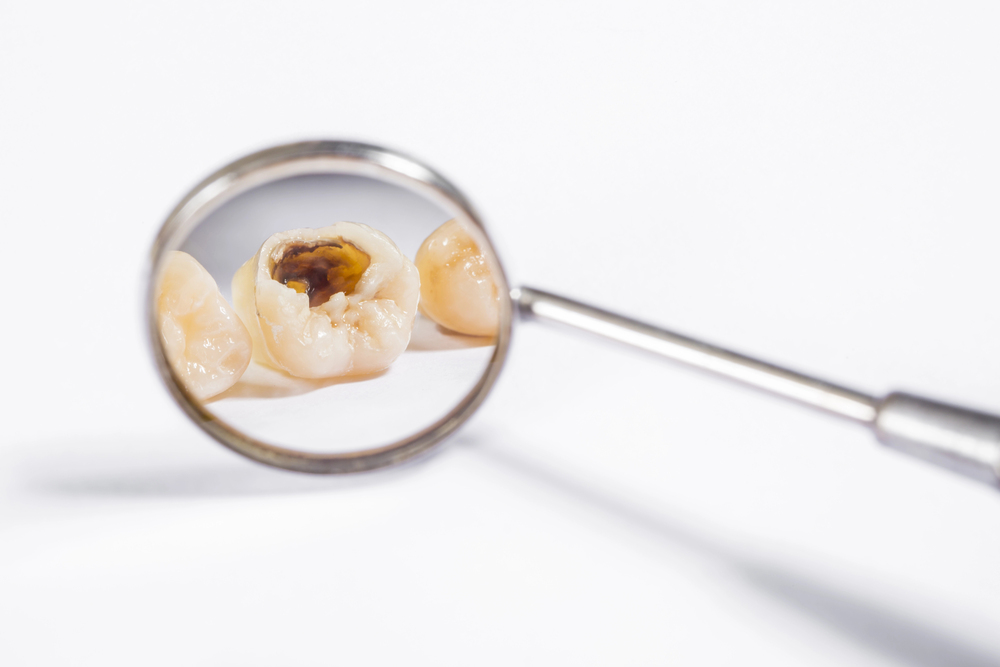
The stages of tooth decay don’t all play out the same way, and they aren’t all treated the same way either. Some stages can be reversed completely with the right care. Others require treatment to stop the damage and protect what remains. The earlier decay is caught, the simpler the path forward. Here is what you need to know about each stage and what your dentist can do to help.
How Tooth Decay Starts
Tooth decay does not appear overnight. It builds slowly, often without any warning signs in the beginning. Understanding what sets it in motion makes it easier to get ahead of it.
The Role of Plaque and Bacteria
Plaque is a sticky film that clings to your teeth and contains the bacteria responsible for decay. Every time you consume sugary foods and drinks, those bacteria produce acids that wear away at enamel. The more often your teeth are exposed to those acids without being cleaned, the more damage builds up. Brushing and flossing consistently to remove plaque breaks that cycle before it causes real harm.
Why Decay Progresses Silently in the Early Stages
One of the trickiest things about tooth decay is that it causes no pain and no visible changes in the earliest stages. By the time discomfort sets in, the decay has usually moved well past the surface. This is exactly why regular dental visits are so valuable. Your dentist can identify decay long before you notice it yourself, and early detection means simpler treatment.
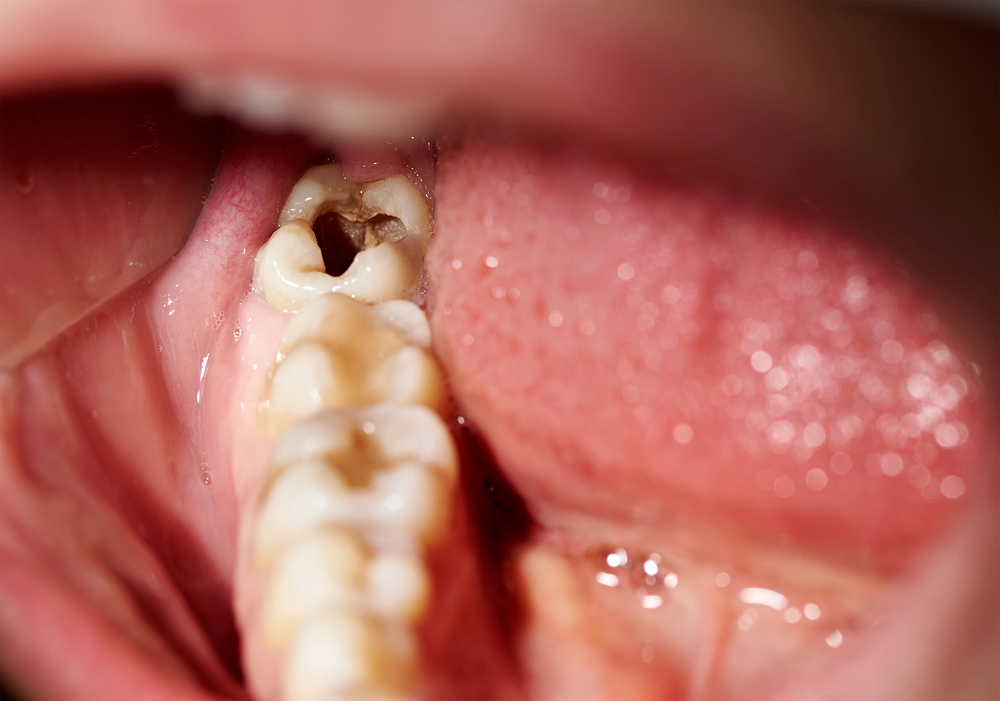
The 5 Stages of Tooth Decay
Stage 1: Demineralization
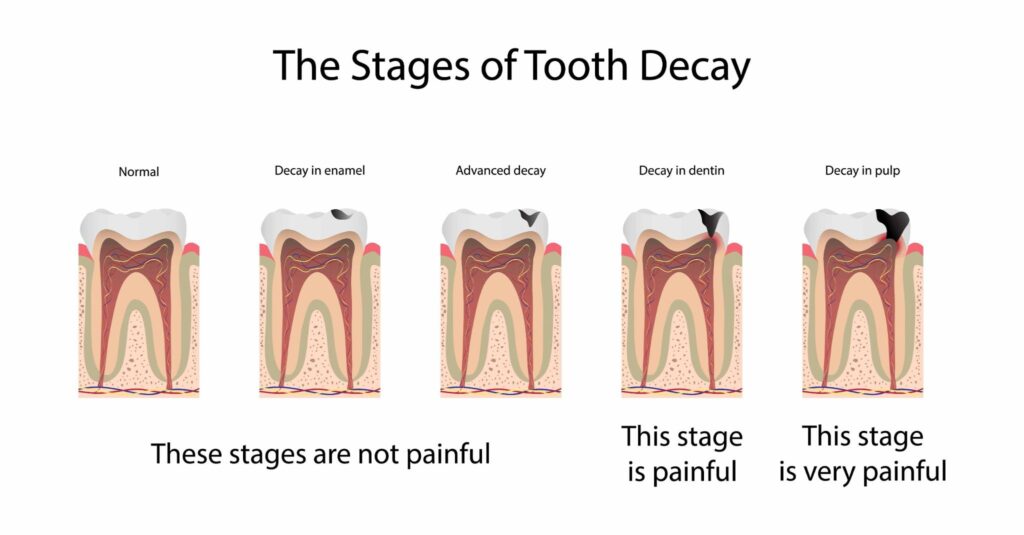
Demineralization is the first stage of tooth decay, and it is the only one that can be fully reversed. Acid from bacteria begins stripping minerals from the enamel, and the earliest sign is often the appearance of white spots on the tooth surface. The enamel is weakened at this point but not yet broken. With fluoride treatments and improved oral hygiene, the enamel can actually remineralize and recover. No drilling, no filling. Just early action.
Stage 2: Enamel Decay
If demineralization is not addressed, enamel decay sets in. The enamel begins to break down and a small cavity forms. This is a permanent change, but the damage is still limited to the outer layer of the tooth. A filling at this stage is a quick, straightforward fix that stops decay from going deeper. Catching enamel decay early makes a real difference in how simple the treatment is. Learning how to strengthen your teeth and keep enamel as resilient as possible between visits is important.
Stage 3: Dentin Decay
Once decay breaks through the enamel, dentin decay begins. Dentin is softer and more porous than enamel, which means decay spreads more quickly from this point on. This is also when many patients start to notice tooth sensitivity to hot, cold, or sweet foods. If your teeth have been sensitive lately, it is worth getting them checked. A filling can still address dentin decay, though it will be more involved than at Stage 2.
Stage 4: Pulp Infection
When decay reaches the pulp, the soft inner tissue containing the nerve and blood vessels, a pulp infection develops. This stage brings real pain, swelling, and persistent sensitivity. At this point, a filling is no longer enough. Root canals are the appropriate treatment, removing the infected tissue and giving the tooth a stable foundation for a new crown. Root canal treatment often gets a bad reputation, but it is what allows the tooth to be saved.
Stage 5: Abscess Formation
An abscess forms when an untreated pulp infection spreads into the bone and tissue surrounding the tooth root. The symptoms are hard to ignore: severe pain, facial swelling, fever, and sometimes a visible bump on the gum. This is a dental emergency. Treatment involves clearing the infection and draining the abscess. In many cases, the tooth cannot be saved at this stage, making tooth loss the likely outcome.
Which Stages of Tooth Decay Are Reversible?
Of all the tooth decay stages, only Stage 1 is fully reversible. At that point, the enamel has lost minerals, but the structure is still intact. Good oral hygiene combined with fluoride treatments can bring it back. From Stage 2 onward, the structural damage is permanent. That does not mean it cannot be treated, but it does mean a filling, root canal, or other procedure becomes necessary to restore the tooth and stop the decay. The takeaway is simple: earlier is always better.
How Fast Does Tooth Decay Progress?
There is no single timeline. Decay can sit at Stage 1 for a year or more with good oral hygiene and a low-sugar diet. In other circumstances, it moves quickly, especially once dentin is involved. Regular cleanings and exams are the most reliable way to track how a tooth is doing. Your dentist can catch changes between visits that you would never notice on your own. Routine dental care is the most effective way to monitor the stages of decay and slow that progression.
How to Stop Tooth Decay at Every Stage
At Stage 1, consistent oral hygiene and professional fluoride treatments can prevent tooth decay from progressing further. At Stages 2 and 3, a filling removes the decay and helps restore the tooth. At Stage 4, root canal treatment saves the tooth. At Stage 5, emergency dental care is the priority. If you grind your teeth, a night guard can protect enamel between visits since grinding accelerates enamel wear. Professional cleanings and regular cleanings and exams give your dentist the chance to catch problems at the most treatable stage.
See Ashley Harrison, DDS Before Decay Advances
Tooth loss is the outcome when decay reaches its final stages untreated. Ashley Harrison, DDS is a dentist in Chico who takes the time to explain what is happening with your teeth and lay out your options clearly. There is no pressure, just honest guidance and care. Schedule your exam today and find out exactly where your teeth stand.
Frequently Asked Questions
Can tooth decay be reversed?
Yes, but only in its earliest stage. Stage 1, called demineralization, is the one point where the damage has not yet become permanent. The enamel has weakened, but its structure is still intact. Consistent oral hygiene and fluoride treatments can remineralize the enamel and stop decay before a cavity ever forms. Once a cavity develops, the damage is structural and permanent, and a filling or other treatment becomes necessary to restore the tooth. Catching decay at Stage 1 through regular dental exams means no drilling and no cavity.
What does early stage tooth decay look like?
The earliest sign is white spots on the surface of a tooth where minerals have been stripped from the enamel. The spots may look slightly chalky or dull compared to the surrounding tooth. As enamel decay advances, the discoloration shifts from white to yellow to brown or black, and eventually a visible pit may develop. In the very earliest stages, decay is usually invisible without an X-ray, which is why it so often gets discovered at a routine dental checkup rather than noticed at home.
Does tooth decay always cause pain?
It does not, and that is one of the reasons it tends to get caught late. In the earliest stages, decay stays within the enamel and causes no pain. Most people feel nothing until the cavity reaches the dentin in Stage 3, when sensitive teeth symptoms often begin. By Stage 4, when the pulp becomes infected, significant pain is usually present. Stage 5 brings severe pain and swelling. The absence of pain does not mean everything is fine. Regular exams are the only reliable way to find decay before it hurts.
How fast does tooth decay progress from one stage to the next?
It varies based on diet, oral hygiene habits, saliva production, and how often a person gets dental care. Decay can remain at Stage 1 for a long time with consistent brushing, flossing, and a low-sugar diet. Frequent sugar consumption, skipping professional cleanings, and poor brushing habits all speed things up. Once decay reaches the dentin, it moves faster because dentin is much softer than enamel. Routine dental care is the most effective way to monitor and slow that progression.
What happens if tooth decay is left untreated?
Left untreated, tooth decay progresses through each stage until it reaches the pulp and triggers an infection. If that infection spreads beyond the root, an abscess develops and the tooth usually cannot be saved. Tooth loss is the end result. Beyond losing the tooth, surrounding teeth can shift, bite problems can develop, and bone loss in the jaw can follow. A problem that could have been a simple filling at Stage 2 becomes a much more involved situation the longer it goes without attention.
How do I know what stage of tooth decay I have?
In most cases, you cannot tell on your own, especially in the earliest stages. Stages 1 and early enamel decay are often completely invisible without an X-ray, and many patients have no idea a cavity is forming until their dentist finds it at a checkup. White spots on the tooth surface can be a clue, and sensitivity to heat, cold, or sweets can signal that decay reaches the dentin. By the time noticeable symptoms appear, decay has often progressed past the most treatable stages of tooth decay. A dental care appointment with X-rays is the only reliable way to know where you stand.